
A Layered Life: Diana's Story
Stories about what we choose to make precious and hold meaning.
I spend a lot of time sharing the stories behind the jewelry I make — where an idea came from, why I chose a particular stone, or how a piece came to be.
But once a piece leaves my hands, another story begins.
Layered Life is a series about those stories: the milestones we choose to mark, the objects we hold onto, and the meaning jewelry gathers as it moves through our lives.
A conversation with collectors about what they wear, what they keep, and why they chose to make it precious.
First up is Diana | AKA @bejeweled_diana
Diana is an archeologist and museum curator who spent over 20 years excavating a single site, uncovering how people in the 17th century dressed, healed, and lived in their bodies.
With her daughter now in college, Diana finally had the time to return to a project she'd carried for years.
She wanted to mark the journey and treat herself along the way.

Q
Can you tell me a little about your book and the journey of bringing it into the world?
A
My book project is a culmination of a long research project into the 17th century. I'm an historical archaeologist and museum curator and I've been excavating a site on campus for over 20 years. For most of my career, I have focused on research on the 17th century, particularly the body, dress, clothing, and health. The current research project was one that I had in mind for years. Basically, when you are sick, how do you comfort yourself? As an archaeologist, we think about what people leave behind –– what does our trash tell us about the way that we live. So, what do we leave behind when we try to heal ourselves or our loved ones? What would those items be in the archaeological and archival records from 17th century New England? The story is interesting (at least to me and hopefully a few others who will buy the book) as in Puritan New England it included tobacco, religion, pipes, medicine (the physick), fear of witchcraft and the devil, and knowledge of one's physical and spiritual body.
Q
What did the project mean to you in that period of your life?
A
This research happened in an interesting time –– post-pandemic –– during which we have all thought a lot about sickness, the anxieties of getting better, measuring how you feel in your body, and what treatment and healthcare means. I hadn't worked on a big project for a while and now that my daughter is in college, I had more time to write and do research.

Q
I remember that each of your pieces marked a different milestone in the process. Can you walk me through those milestones and which piece you chose for each one?
A
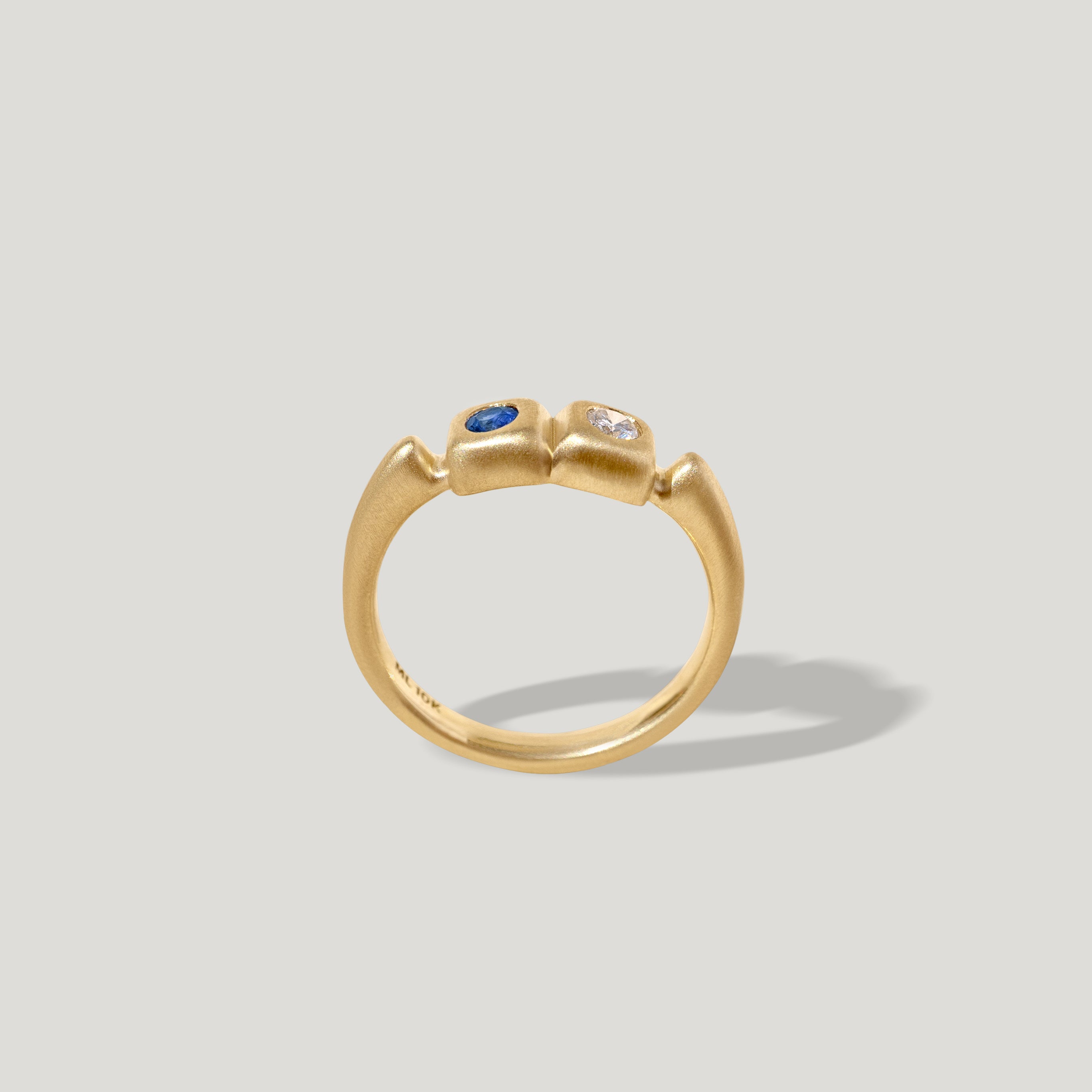
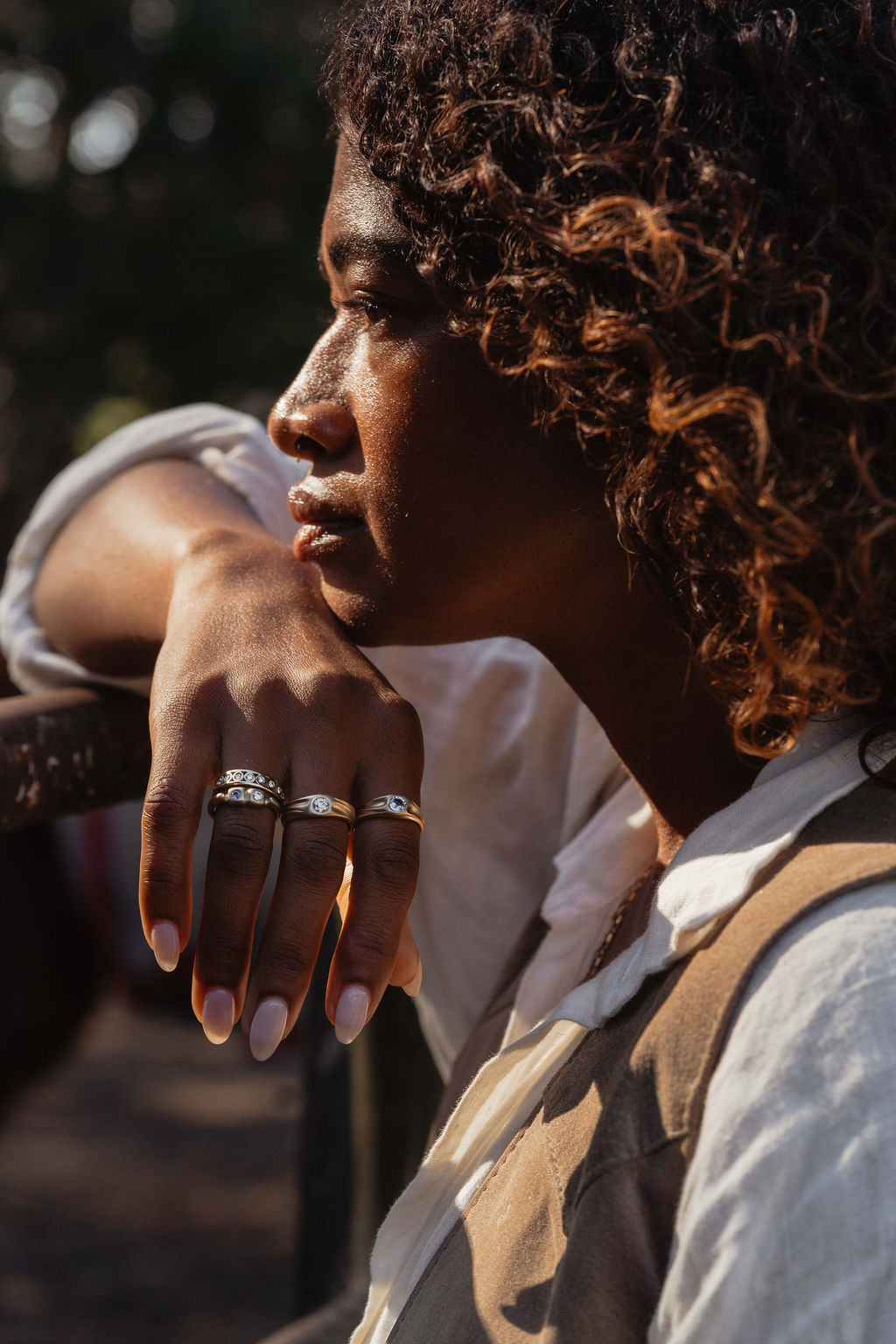
I wanted to mark the journey and treat myself along the way. What I like about the pendulums is their weight and heaviness, that they are tactile and a touch-piece, something that adorns your body (which ties into my research). So, I wanted to mark the parts of my progress in the project through adornment. The first was the Ruby Pendulum No. 1, which marked finishing the manuscript; this was followed by the salt and pepper diamond Pendulum Charm No. 8, when I finished copyediting (death a thousand cuts where you realize that you can't write worth shit); then, finally, the book in print marked by the custom Ruby and Diamond Twin Trove Ring.

"What I like about the Pendulum Charms is their weight and heaviness, that they are tactile and a touch piece, something that adorns your body."
Q
Have you always been someone who collects objects? Was it always jewelry or did you start with something else? I’d love to hear about some of the earliest objects you remember caring about.
A
Jewelry has always been part of my life and it has surprised few that I have spent a career talking about clothing, adornment, and the body. My beloved mamma Filomena loved jewelry too and when she passed, I inherited her pieces that I now wear in commemoration of her. Her necklace that she wore her entire life and that is in every picture, the chain her brother bought her in their hometown in Italy when I was born, the earrings her mother wore that were passed to me.
Q
How did you choose each piece?
Was there something about the shape, feeling, or design that felt connected to that particular milestone?
A
Your story of the Pendulum and your grandmother has always spoken to me about those items that link generations. I love my pendulums because they are beautiful but also because of the story behind them and the meaning that we ascribe to them. How we choose to adorn our bodies speaks to who we are––daughter, granddaughter, mother, scholar, artist, writer, etc. So, I invest in those pieces that resonate with those different parts of myself and those different periods in my life. They are for me and, ultimately, my daughter so she can remember me and who I was.
"How we choose to adorn our bodies speaks to who we are––daughter, granddaughter, mother, scholar, artist, writer, etc. So, I invest in those pieces that resonate with those different parts of myself and those different periods in my life."