
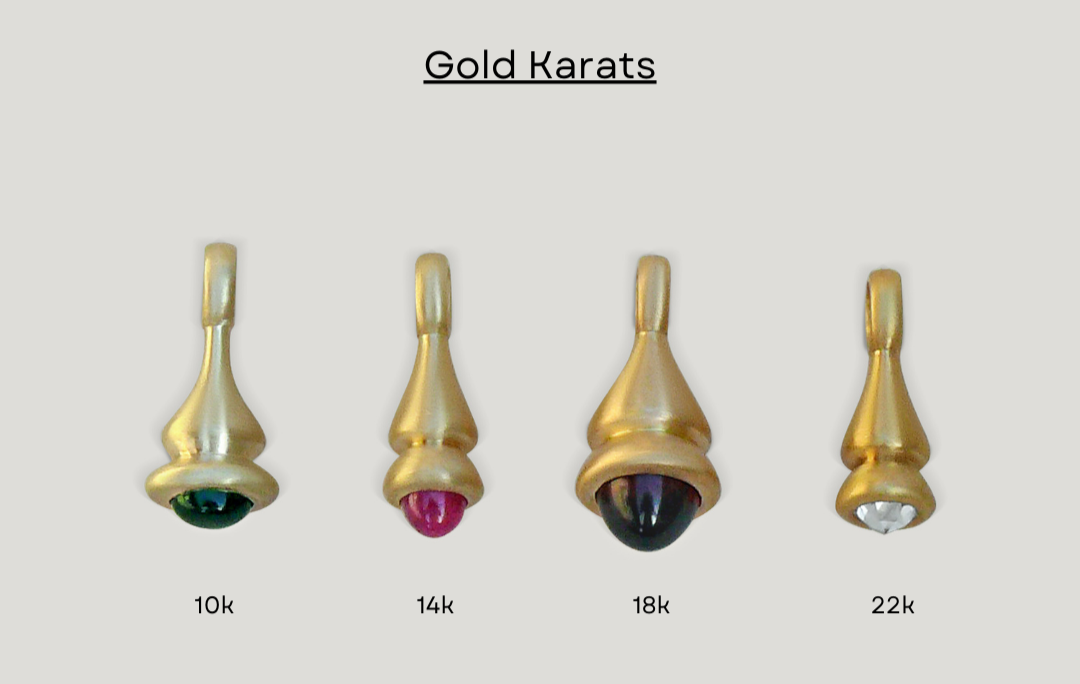
Gold Karats
Unsure what the different gold karats mean and how to choose which one is right for you? Read this guide to understand how I approach 10k, 14k, 18k, and 22k gold within the Made Line collection.
Pure gold (24k) is naturally very soft, so in jewelry, it’s almost always alloyed with other metals (like silver, copper, zinc, or palladium) to increase strength and durability for everyday wear.
The karat number refers to how much pure gold is present in the alloy.
10K GOLD - contains 10 parts pure gold, out of 24 parts, making it 41.7% pure gold
14K GOLD - contains 14 parts gold, out of 24 parts, making it 58.3% pure gold
18K GOLD - contains 18 parts gold, out of 24 parts, making it 75% pure gold
22K GOLD - contains 22 parts gold, out of 24 parts, making it 91.6% pure gold
The remaining percentage is made up of other metals, which influence the color, strength, and overall character of the final piece.
Gold Alloys
10K GOLD
10K GOLD - contains 10 parts pure gold, out of 24 parts, making it 41.7% pure gold
10k gold contains less pure gold, which makes it a more accessible option in price and slightly lighter in tone depending on the alloy. There can be a wide range of color variation in 10k gold depending on the specific mix of metals used by a manufacturer. Some 10k alloys appear noticeably paler, while others — like the alloy used by my current caster — are remarkably close in color to 14k.
When I first designed the Pendulum Charms, I chose to work in 10k gold because it allowed me to create a solid gold piece at a more accessible price point as a small independent brand. Years later, I still wear my personal 10k Pendulum almost every day. Over time, I’ve noticed that 10k gold can deepen slightly in tone with wear, developing a softer, more lived-in warmth. In my experience, it remains incredibly durable and well-suited for everyday jewelry.


Gold Alloys
14K GOLD
14K GOLD - contains 14 parts gold, out of 24 parts, making it 58.3% pure gold
14k gold is often considered the classic standard for fine jewelry. It strikes a balance between richness in color and durability, making it well-suited for pieces meant to be worn every day.
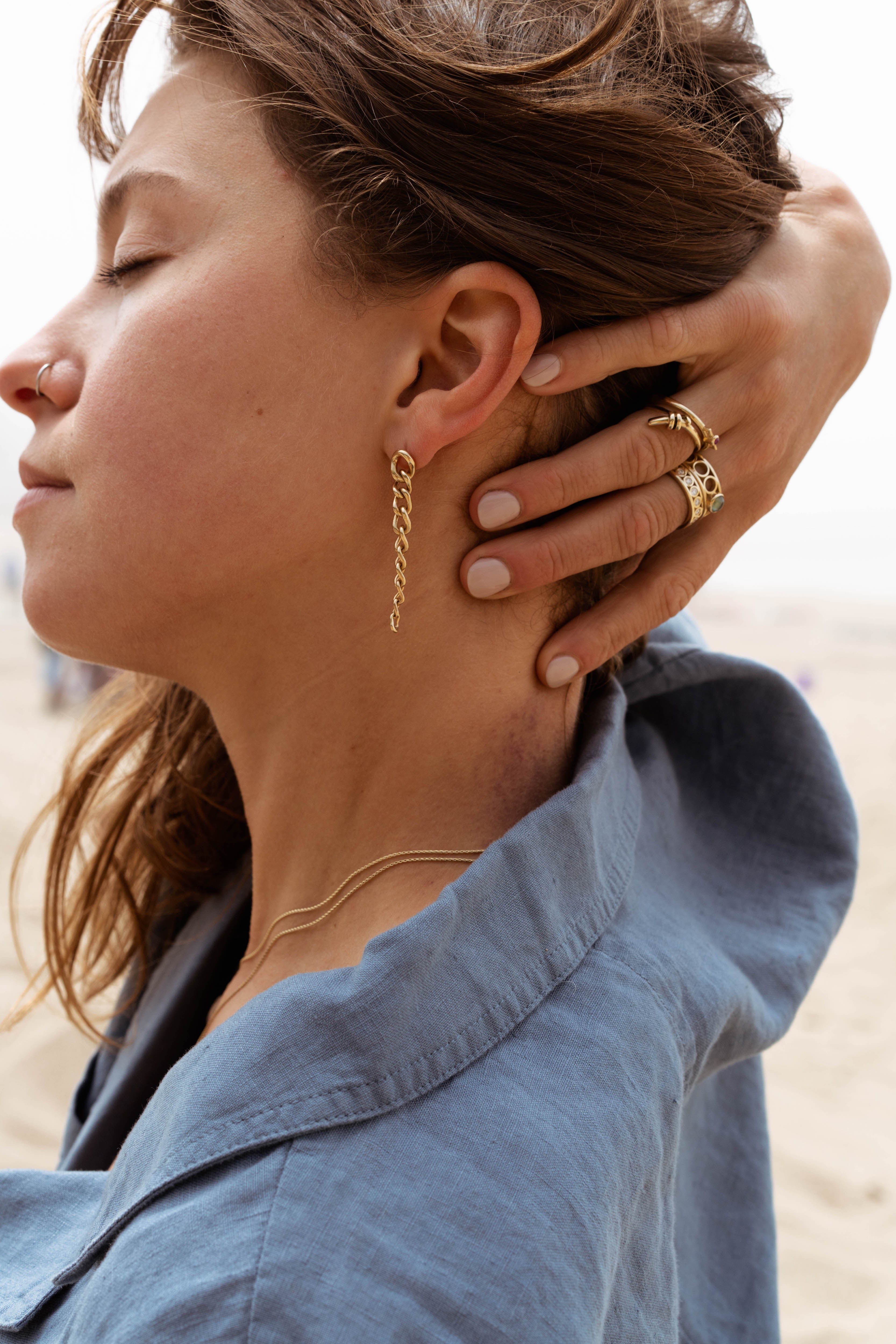
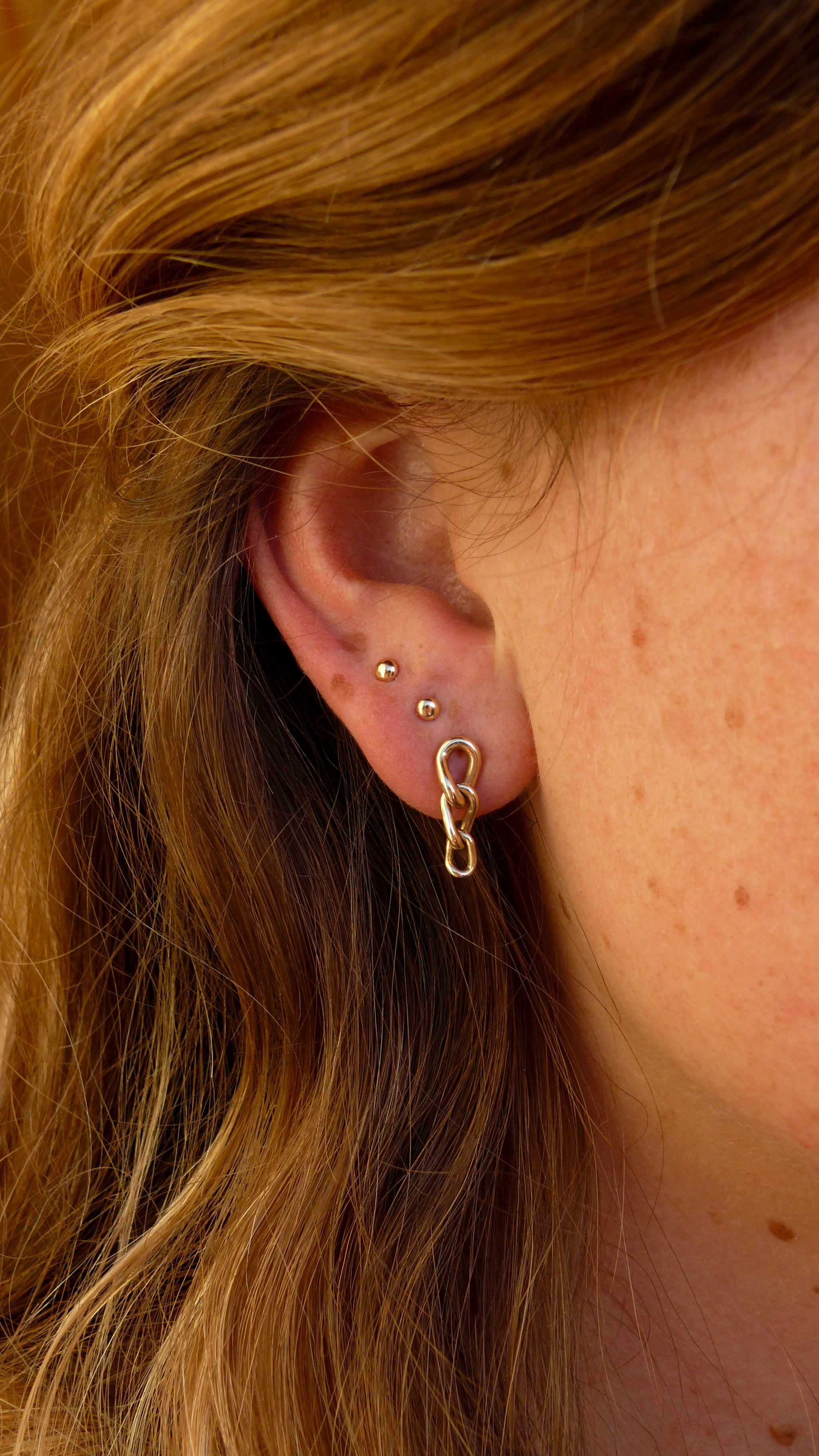
I personally prefer all of my earrings to be at least 14k (to avoid any possible irritation in my ears from the alloy metals), but I am more open to 10k for charms, chains, and rings.
Gold Alloys
18K GOLD
18K GOLD - contains 18 parts gold, out of 24 parts, making it 75% pure gold
18k gold contains a higher percentage of pure gold, giving it a richer, more saturated color. Because of its higher gold content, it is also softer than 10k or 14k, and may show scratches or wear more quickly over time.
I personally prefer using 18k in charms and necklaces where I want the rich gold color to really highlight the color of the gemstones.

Gold Alloys
22K GOLD
22K GOLD - contains 22 parts gold, out of 24 parts, making it 91.6% pure gold
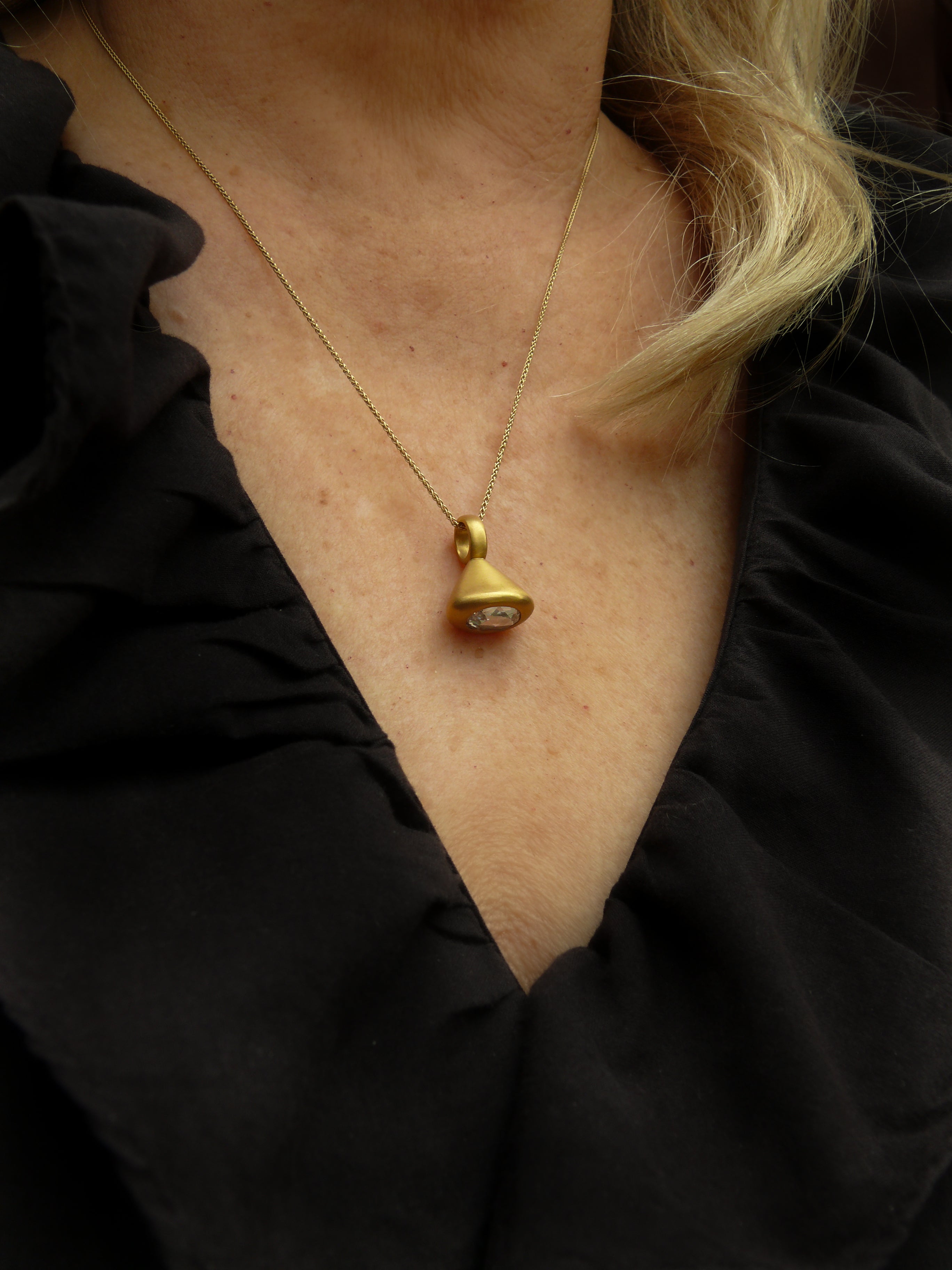
22k gold is typically the highest karat I will personally use in jewelry. It is close to being pure gold, making it softer for everyday wear, but extremely rich in color. Because of this, it will show scratches and wear more quickly over time, which is why I like to reserve 22k for charms and pendants only. I absolutely love the look of 22k with diamonds, rubies, and emeralds––the rich color combinations feel extra special and almost immediately make it look like an ancient artifact.
